


REGION 7: PETRA TO RUM
-
Details
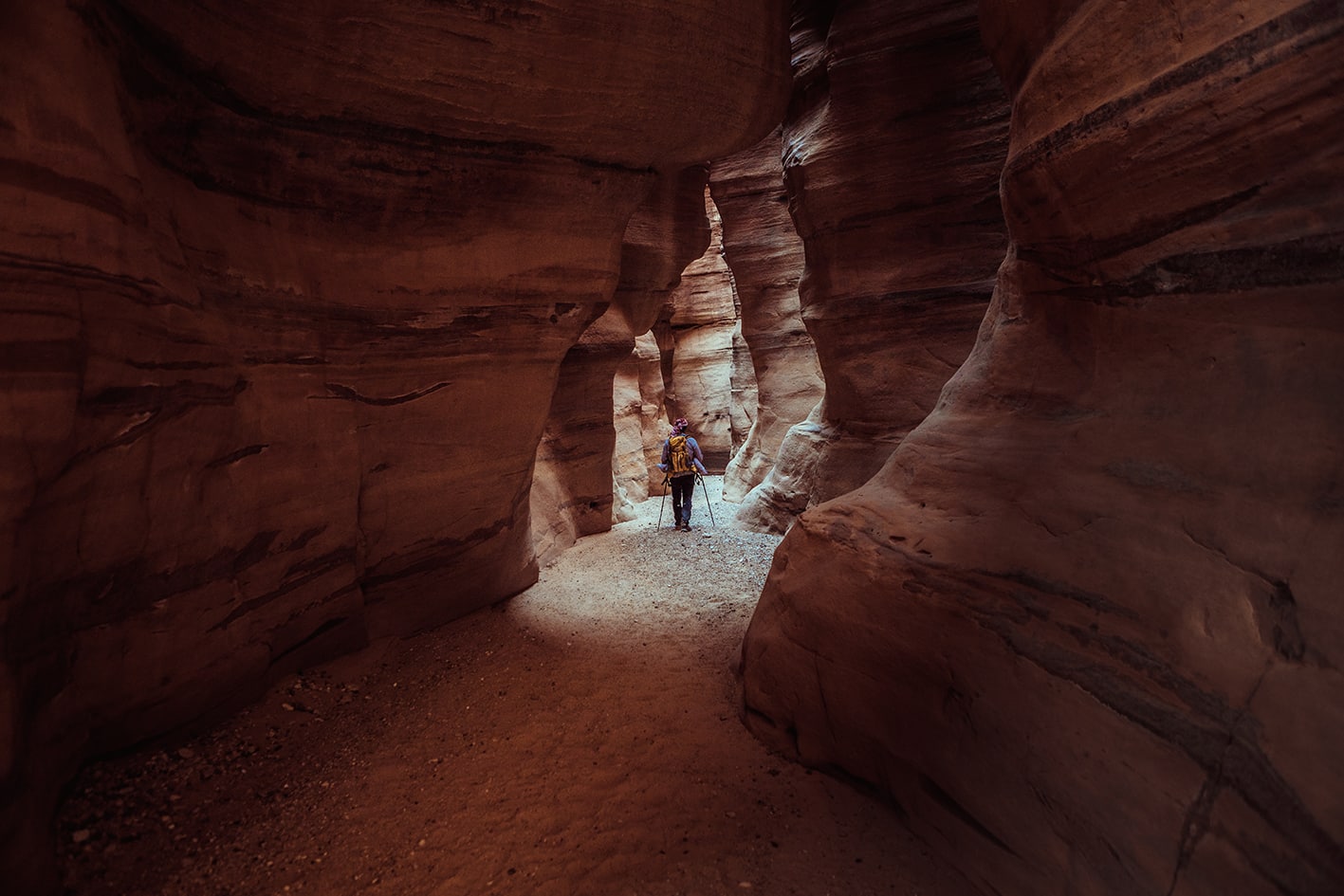
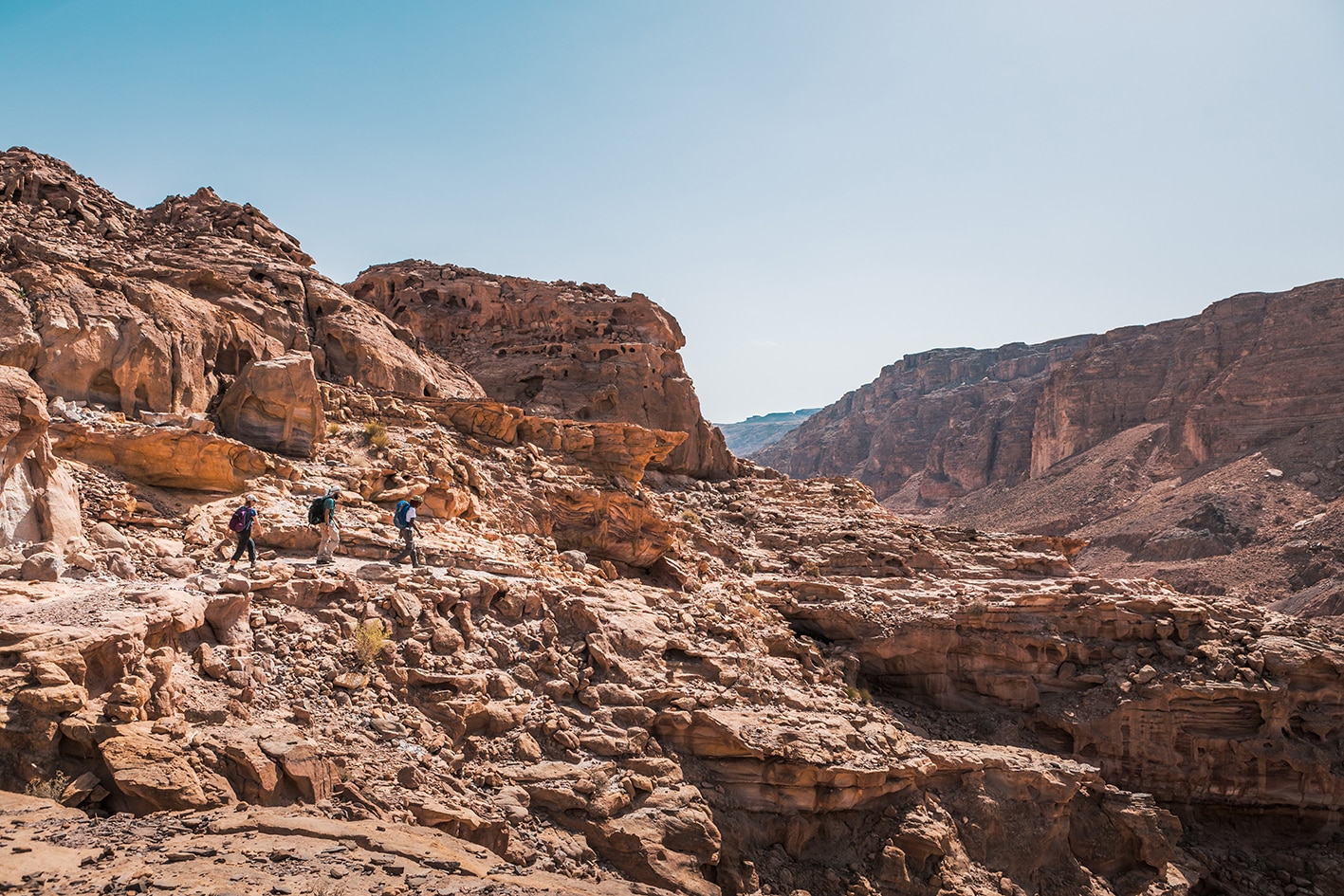
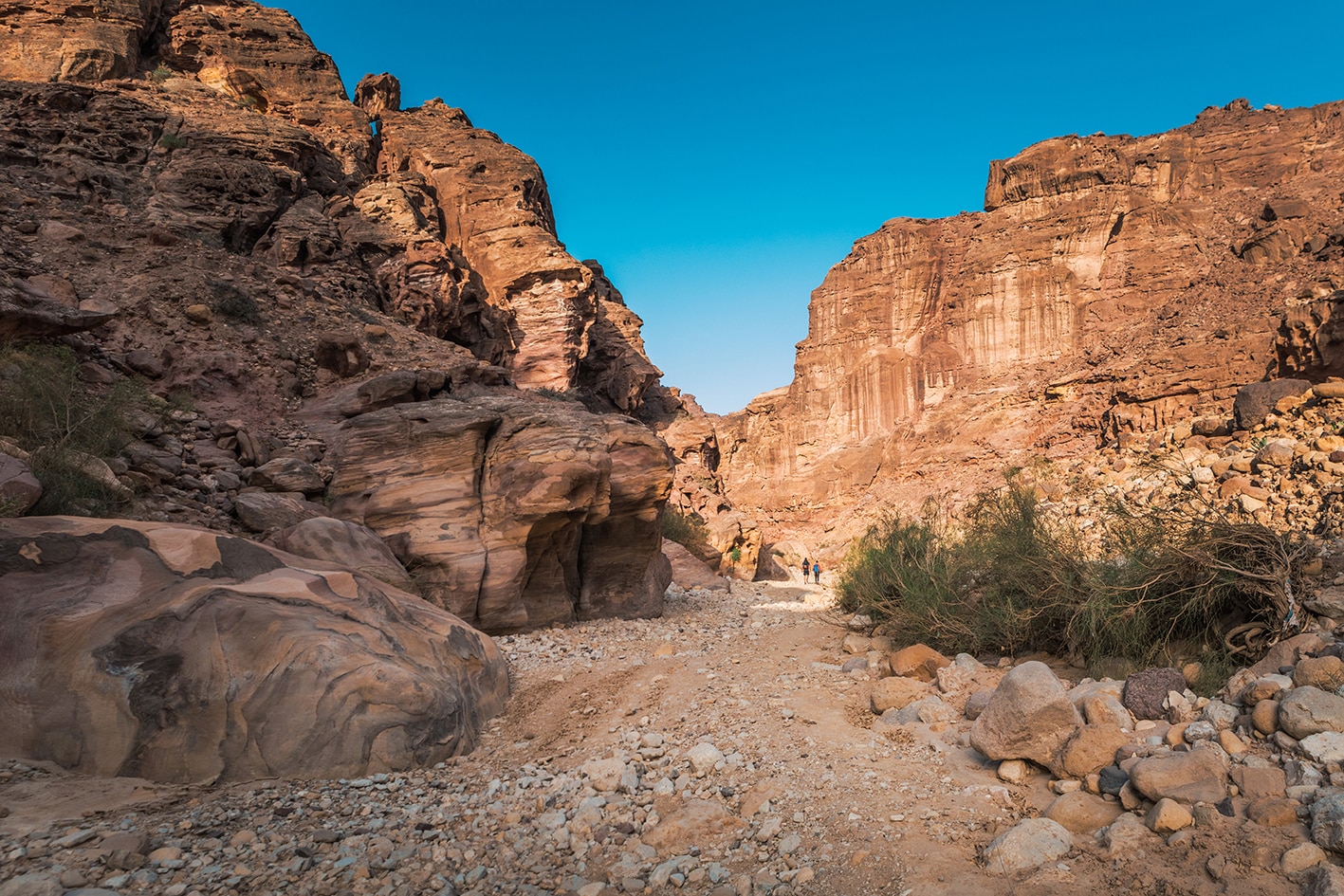
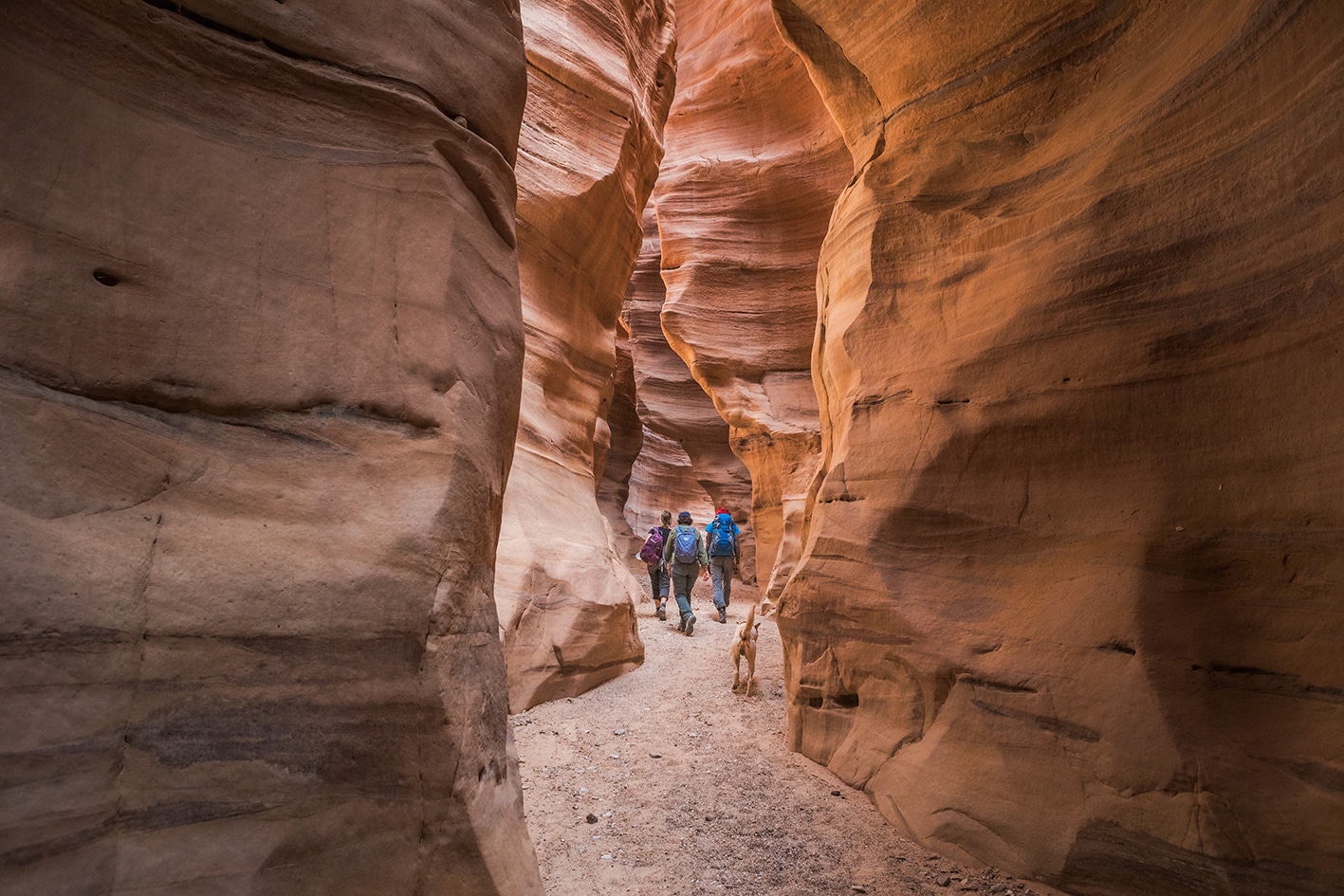
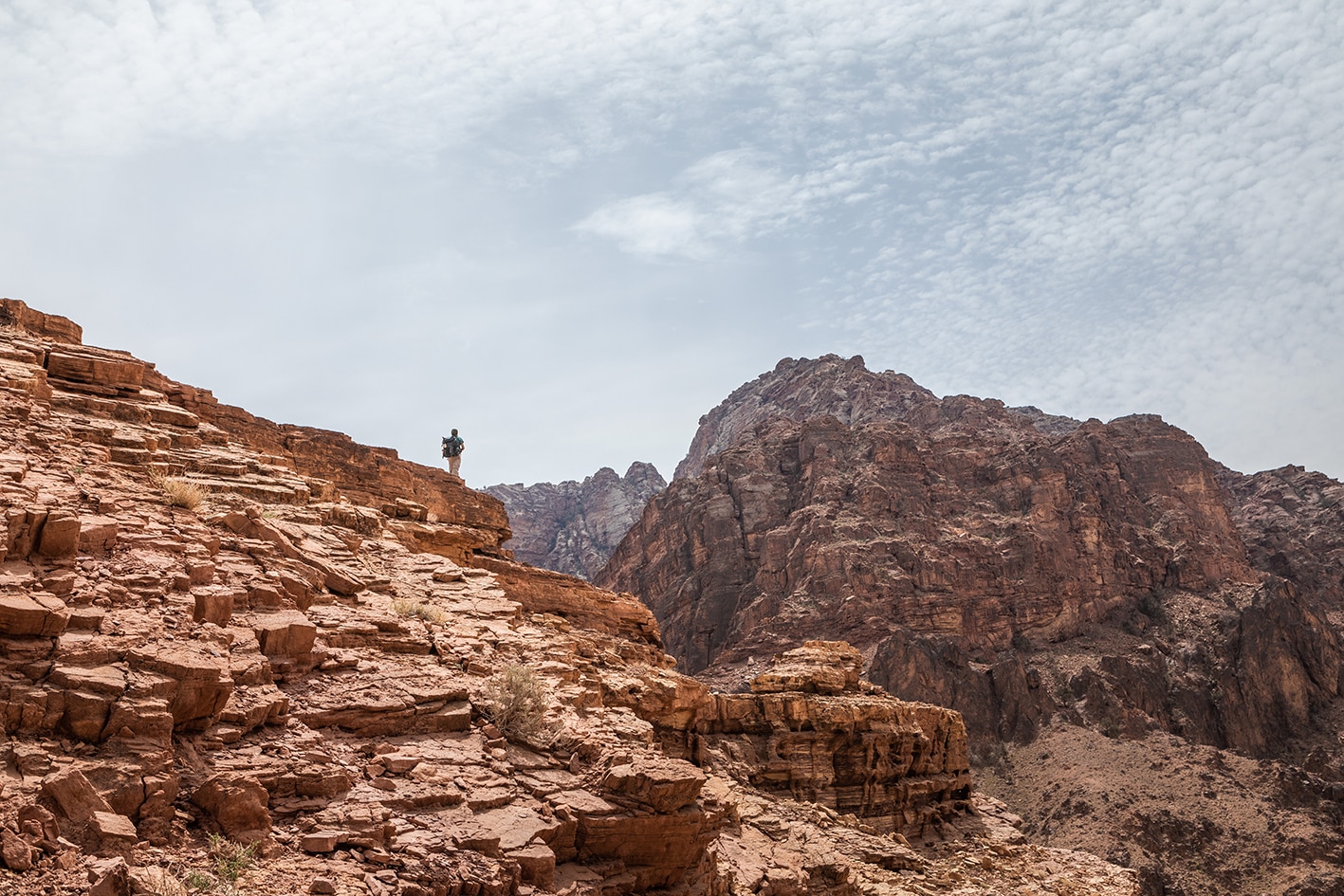
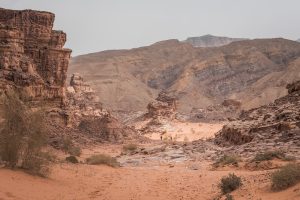
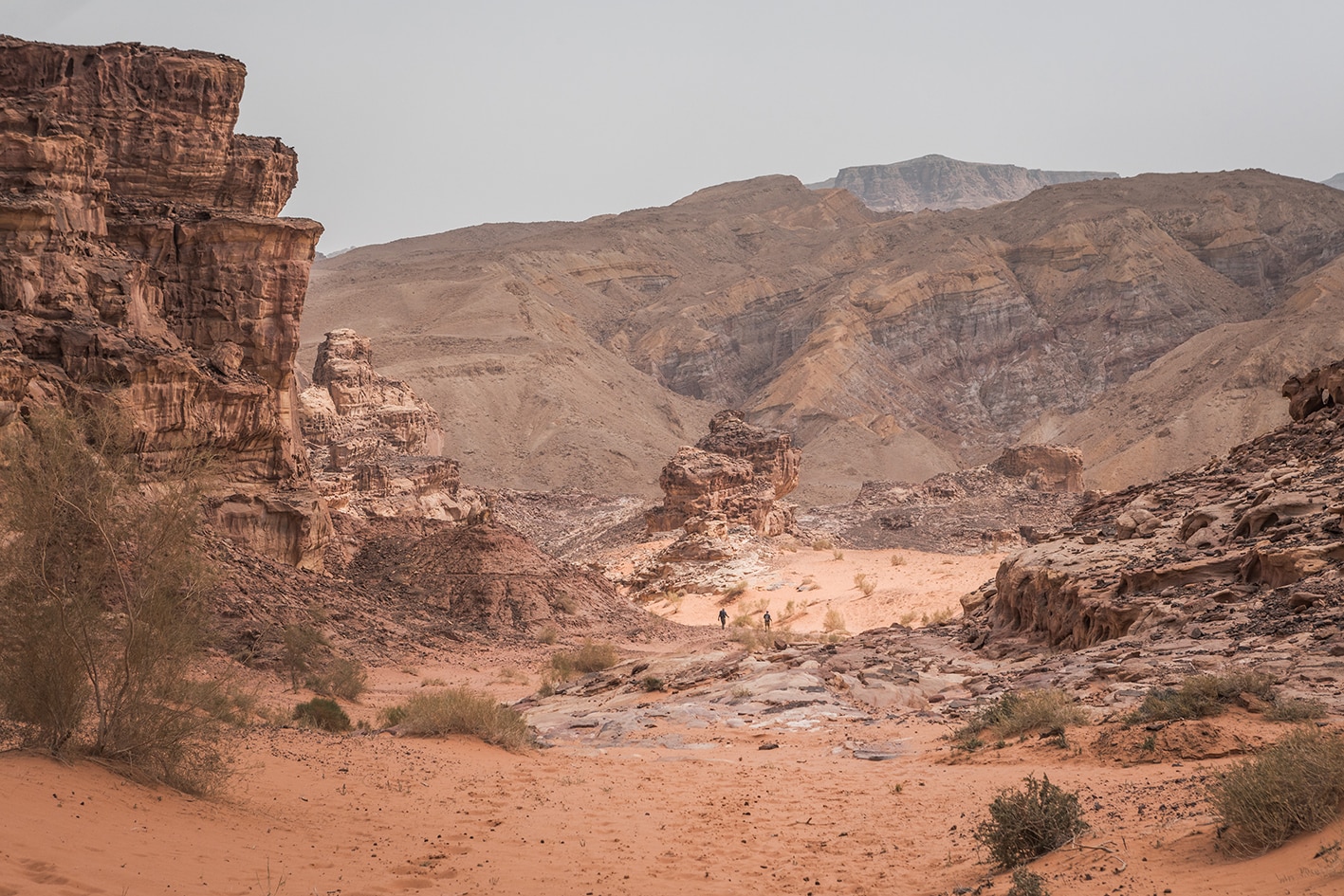
Linking two global icons; Petra and Wadi Rum, this week-long stretch crosses one of the longest wilderness sections of the trail. The terrain transitions from rugged wadis to expansive sandy plains framed by towering sandstone formations. Here, silence dominates, night skies blaze with stars, and human presence feels minimal. The approach into Wadi Rum reveals landscapes that have inspired explorers and writers for generations.
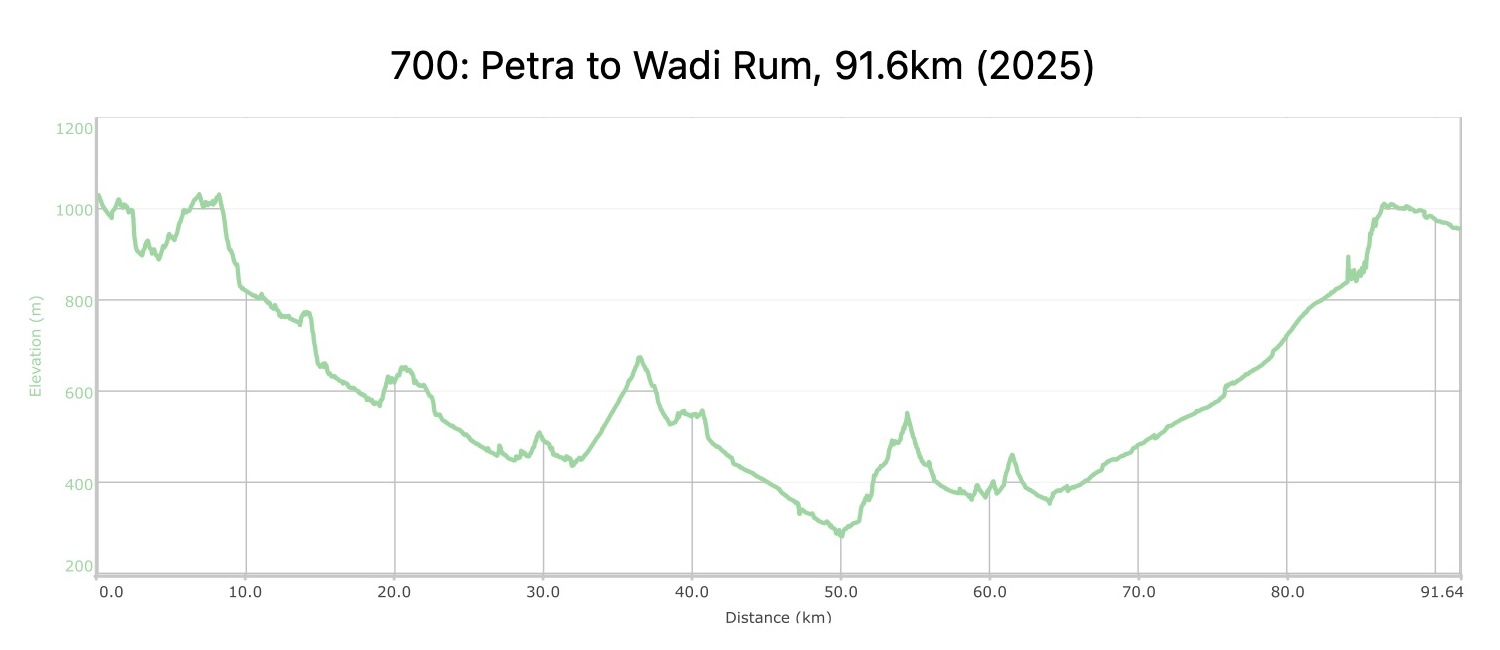
5 days Distance: 91.6 km Ascent: 2,354 m Descent: 2,427 m Max Elevation: 1,032 m Min Elevation: 274 m
-
Main sites in the region:
-
Petra, Nabatean capital and wonder of the world (World Heritage Site)
-
Jebel Haroun (mountaintop burial place of Aaron, off-route)
-
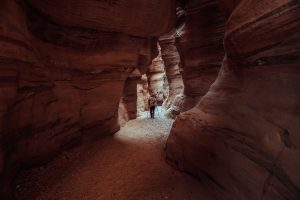
The Colored Canyon
-
Wadi Aheimar
-
Humeima, ancient and Umayyad ruins
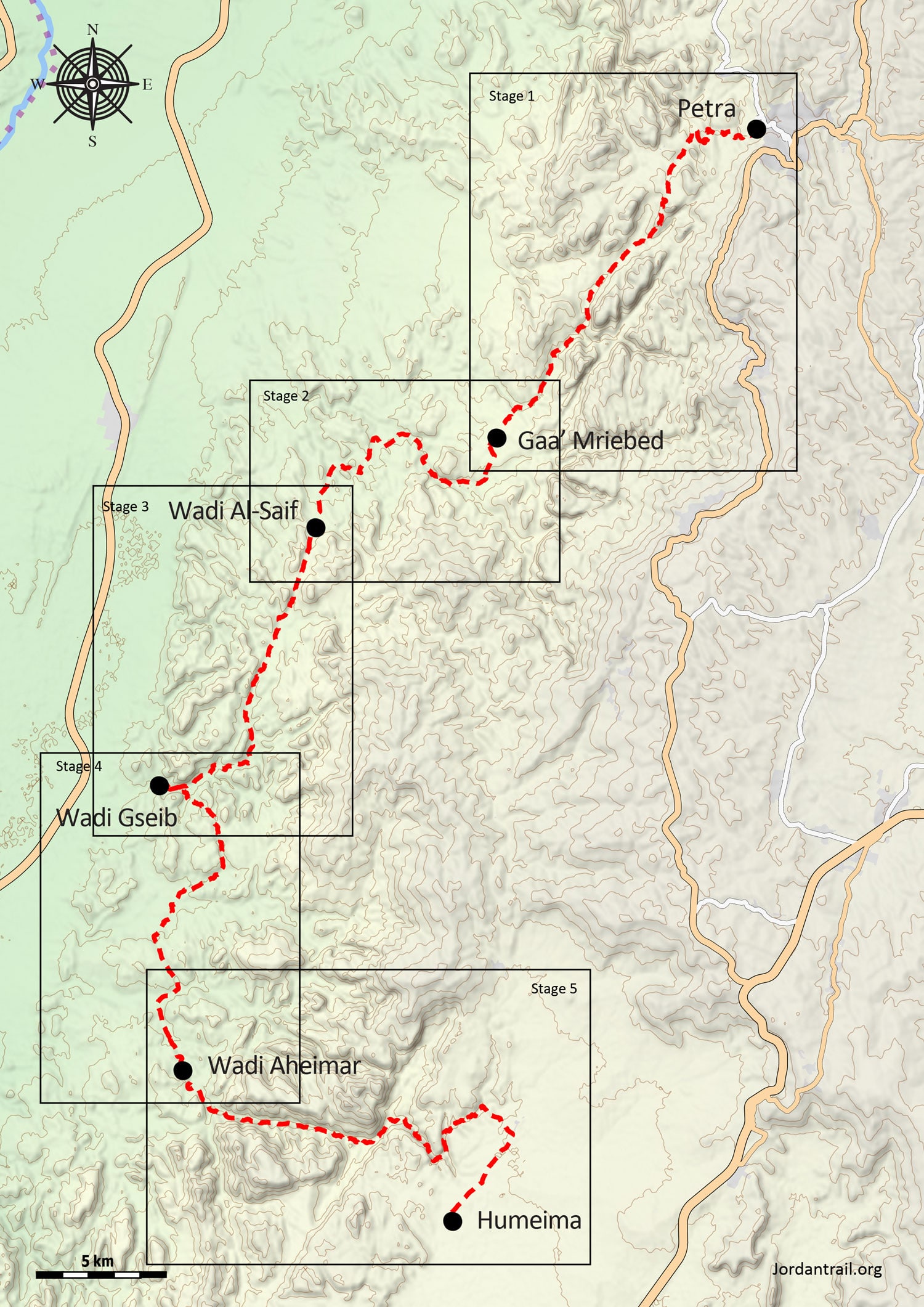
- Route Map
- Google Map
- Elevation Chart
- GPS

REGIONAL TRANSPORTATION
Petra’s neighboring town of Wadi Musa can be reached by public transportation (minibusses from Amman or Aqaba, or JETT tourist buses from Amman, which run on schedules and are more comfortable but slightly more expensive).
Wadi Rum is more difficult to reach; a daily bus runs from Petra, and another from Aqaba. Otherwise, any public minibus running along the Desert Highway (including those between Amman and Aqaba) will pass Rashidiya junction, where you can disembark and try to find private transportation to Wadi Rum.
For more information on transportation in Jordan, click here.
Accommodations
Wadi Musa is packed with hotel options and Wadi Rum with Bedouin camps offering a similar experience, often also including jeep or camel tours. Rum village also has the “rest house,” a small restaurant where you can camp in the back yard with a provided tent (3JD) or your own tent (2JD).
Throughout most of the route, wild camping is the only option. The suggested stages each end at a recommended campsite; these are sometimes close to water and sometimes not. The longest stretch without water is from Humeima to Shakriya, so plan accordingly to carry plenty of water for the day-and-a-half hike, and camp without a water source!
The very isolated landscape has plenty of spots for discreet camping, particularly amid the sandstone mountains from Humeima onward. Wadi Rum and its surroundings are similarly replete with quiet spots. In all cases, the lack of water is the largest challenge to unsupported camping; the trail includes as many water points as possible, but sometimes long distances between refills are still necessary.